The world is racing to harness artificial intelligence. At Biblica, we’re part of a team that’s racing to redeem it.
For decades, the church has often found itself reacting to technological change rather than shaping it. But when it comes to AI, Christians aren’t late to the party, we’re early. It’s not about simply adopting this technology, it’s about actively steering it toward Kingdom purposes.
This is the heart of redemptive AI: using technology not for profit or power, but for the proclamation of the Gospel to the ends of the earth.
The Intersection of Mission and Technology
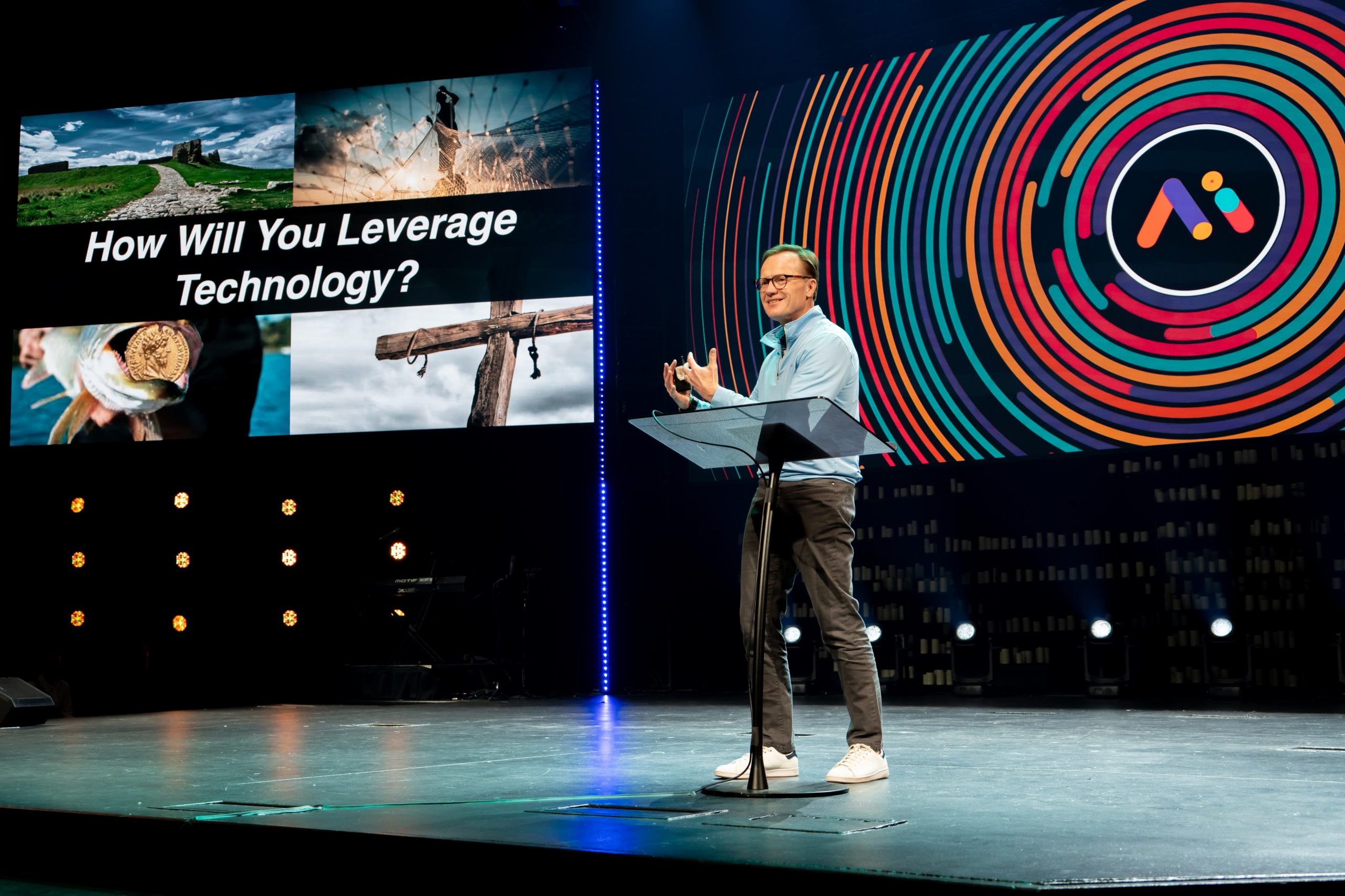
Since 2021, Biblica has been proud to serve as part of the organizational backbone for the Missional AI Global Summit, a collaborative effort bringing together forward-thinking leaders from across the Christian ecosystem. What began with 50 people and a virtual gathering has doubled every year. This year, April 7-9 in Santa Clara, California, we’re planning for 800 attendees from around the world.
This isn’t just another tech conference. It’s the largest gathering of Christians working in the AI and technology space, a unique meeting place where mission meets technology. The summit crates common ground where AI researchers can sit alongside ministry visionaries, where technologists and theologians wrestle together with the one of the most pressing questions of our time: How do we use AI in a way that serves the Kingdom of God?
Getting Ahead of the Technology
In the missions space, we never have enough resources. There are never enough tools to make the Bible accessible to everyone. Never enough workers to reach the unreached. While AI can never replace the work of missionaries and ministries, it can be used to enhance it. In the same way the Gutenberg press helped bring the Bible, once a text only available to the elite, to the masses, AI technology can help advance the Word of God into the places that are the hardest to reach: the last mile of the Great Commission.
But advancement without wisdom is dangerous.
That’s why the Missional AI community is committed to getting ahead of this technology, not just using it, but shaping how it’s built and deployed. We’re training AI models to pull exclusively from Scripture and biblically sound sources. We’re developing principles for responsible, redemptive development. We’re asking hard questions about ethics, accuracy, and accountability before problems arise.
Even secular voices are taking notice. When The Economist covered the global church’s ambitious goal to make Scripture accessible to all people by 2033, they highlighted how Christian organizations were early adopters of AI for Bible translation, showing up to shape the technology rather than simply react to it.
Technology That Fosters Human Thriving
At Biblica, we’re pioneering AI-assisted translation, but not in the way many assume. This isn’t about machines replacing humans, it’s a small part of a complex process that helps equip people to translate the Bible into their own language faster than ever before.
Our AI generates rough first drafts using carefully trained language models with a knowledge base that is intentionally narrowed to ensure accuracy, clarity, and theological soundness. The draft serves as a “boost” to get things started, which allows the real work of translation to begin.
Native speakers then refine the translation with cultural and linguistic precision. Next, translation consultants work with the drafts to ensure theological accuracy. Entire language communities then review the work, helping ensure the text flows naturally and makes sense in their context. The result? What once took a decade now takes 2-5 years.
But something even more remarkable is happening. Translators are coming to Christ as they work. Communities are engaging with anticipation and excitement. The very process of translation is becoming a discipleship movement.
This is redemptive AI in action: technology that doesn’t diminish human agency but amplifies human capacity. Technology being used in a way that doesn’t replace relationship but creates space for it, serving not corporate profit but eternal purpose.
From Roman Roads to AI Models
When Jesus commanded His disciples to “go and make disciples of all nations,” the path had literally been laid before them. Roman roads, 250,000 miles of interconnected pathways, had just connected the known world. This engineering marvel made travel easier, advancing trade, connecting cultures, and enabling movement of the Gospel that was previously unimaginable.
The Gutenberg press made Bibles accessible to more people than ever before. The invention of modern printing presses expanded that availability, making it possible for many people to own multiple copies of the Bible. The internet further opened God’s Word to the waiting through Bible apps in thousands of different languages.
The Great Commission launched at the perfect technological moment in history. Since then, new “Roman roads” have continued to open doors for the Gospel to reach those waiting. Now, two thousand years since Jesus told his disciples to go and make disciples of all nations, we stand at another critical moment in history.
For the first time, an impossible goal is within reach: God’s Word, accessible to all people by 2033.
Join the Conversation
You’re invited to join us April 7-9 at the Santa Clara Marriott for the Missional AI Global Summit: Learn more and register at missional.ai.
The future of AI and ministry won’t be determined in Silicon Valley boardrooms or academic research labs alone. It will be shaped by practitioners, theologians, technologists, and ministry leaders working together, asking hard questions, sharing what works, building responsibly and redemptively.
This is why the Missional AI Global Summit matters. Whether you’re an AI researcher exploring how to apply your skills for Kingdom impact, a ministry leader wondering how AI could enhance your work, or a theologian concerned about ensuring we build with biblical wisdom, there’s a place for you in this conversation.
When technology is deployed not for profit or power, but for the proclamation of the Gospel, and when innovation serves not ourselves but the Kingdom, that’s when Roman roads become resurrection highways, carrying the Good News to the ends of the earth.