The season of Easter turns the heart of the global church toward a single, world-changing event: the Resurrection of Jesus Christ. It is a time when we celebrate His victory of light over darkness and life over death. Yet, the Bible shows us that the Resurrection is not merely a historical event to be remembered. It is a reality to be entered into. Scripture points to baptism as a foundational starting point where the believer personally identifies with Jesus’ death and victory over the grave.
The Word of God is the foundation for every step of our journey of faith. In Matthew 28:19, the risen Lord presents baptism not as a suggestion but as a important step of discipleship for all nations. It is a biblical act that establishes a shared identity by identifying us with the name of the Father, the Son, and the Holy Spirit.
By returning to the New Testament text, we find a unifying call to obedience that transcends our differences. From the baptism of Jesus in the Jordan to the instructions given to the early church, baptism serves as a visible connection to the empty tomb. As we examine the heart of Romans 6 and the examples of the early church, we see how baptism invites us to claim the promise of walking in newness of life because He lives.
Romans 6: Understanding Our Union with Christ
Newness to life is not just a good feeling, but a spiritual reality. To understand the profound change that baptism signifies, we can look to the language of the Apostle Paul in the book of Romans. He describes a spiritual reality that goes beyond a physical act. It is a transformative union that mirrors the movement of the Gospel itself.
The Bible places a deep emphasis on the word “united.” Paul explains that through baptism, we are not merely spectators of the Resurrection but participants in it. Romans 6:5 tells us that if we have been united with Jesus in a death like His, we will be united with Him in a resurrection like His. This connection is the core of our identity as followers of Jesus. We are linked to His victory over the grave.
Baptism as a Symbol of Burial and Resurrection
The physical action of baptism provides a vivid scriptural image of this transition from the old life to the new.
- The Burial: Romans 6:4 describes the act of baptism as being buried with Jesus by baptism into death
- The Grave: Just as the old life of sin is laid to rest, the water serves as a symbol of the tomb.
- The New Life: The rising up from the water represents the power of the Resurrection.
- Walking in the Newness of Life: We are brought up so that, just as Christ was raised from the dead by the glory of the Father, we too are raised to life in Him.
This union with Christ changes us from the inside out. Scripture promises that our former way of life was nailed to the cross with Jesus. This was done to break the power of sin, ensuring we are no longer bound to our old patterns or enslaved to our past. Because of this reality, we are now free to live for God. Baptism is a living testimony to the freedom we share in the risen Christ.
The Example of Jesus and the Pattern of Faith
The story of baptism begins with Jesus at the Jordan River. Although He was without sin, He chose to be baptized to “fulfill all righteousness,” (Matthew 3:15) setting a clear path for all who would follow Him. In this act, Jesus did more than give a command. He led the way by identifying with humanity and giving us an example to follow.
The Book of Acts shows how the first Christians followed His example. We see the same thing happen over and over. People heard the Word, believed the Gospel, and responded through baptism. While cultures and settings changed as the message spread, the response remained the same.
Baptism in the Early Church: Examples from the Book of Acts
In the early church, baptism was the natural and immediate response to faith in Christ. This connection between believing and acting is a shared thread found throughout the New Testament.
Pentecost: After hearing the first Gospel sermon in Jerusalem, the response was immediate. Those who received the word were baptized, and about three thousand souls were added to their number that day (Acts 2:41).
The Ethiopian Official: In Acts 8, while traveling on a desert road, an Ethiopian official heard the Good News about Jesus from Philip. After seeing a body of water, he asked, “What prevents me from being baptized?” (Acts 8:36). His baptism stands as a powerful testament to the Gospel’s movement from a single conversation to the transformation of an entire region.
The Importance and Significance of Baptism Today
The significance of baptism remains deeply personal for every follower of Jesus, bridging the gap between the commands of Scripture and the individual walk of faith. At its heart, baptism is a direct act of obedience to the Gospel call. Throughout the New Testament, it is presented as the natural first step for those who trust in Christ. By choosing to be baptized, we align our lives with the Word of God and acknowledge the authority of the slain and risen Lord.
Beyond obedience, baptism serves as one of the most important events of our lives as followers of Jesus. It stands as a visible marker of a spiritual reality. This act confirms that a person has publicly stepped into a new identity. This moment provides a firm point of reference for us, serving as a reminder that we are united with Christ and empowered by His Spirit to walk in a different direction.
One Lord, One Faith, One Baptism
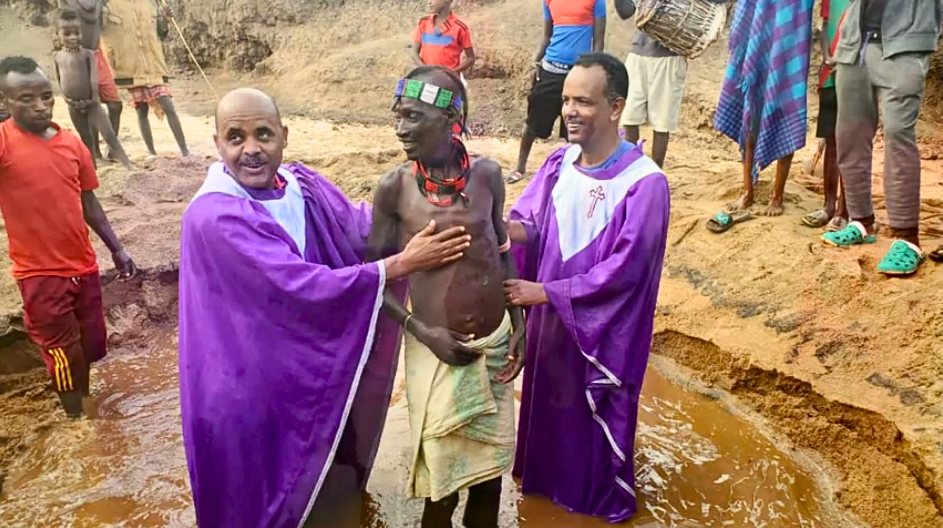
While the settings of baptism may vary, from quiet mountain streams to modern baptisteries, the biblical foundation remains unchangeable. The call to be baptized into the body of Christ is a constant for every believer, serving as a bridge that spans across time, culture, and geography. It is not merely a local tradition but a global declaration of a shared reality.
As we look to the Word of God, we find the ultimate source of our unity. The Apostle Paul reminds us in Ephesians 4:5 that there is “one Lord, one faith, one baptism.” This singular act of obedience connects us to the same resurrection power that moved the early church in the Book of Acts. No matter where we are in our journey, baptism stands as the enduring mark of our life in Christ and our commitment to follow Him.